When my maternal grandmother was still living, I used to visit her whenever I can. We would eat lunch or dinner together. However, as she got older, I found her taste preference quite “revolting.” She sprinkled large amounts of sugar on her rice! She also ate mango with rice! I asked her several times why she ate that way and each time she would just answer: “My food tastes bland.” I didn’t understand what she was going through until I got into college and studied nutrition and dietetics for mature or older adults.
According to Paul Y. Takahasi, M.D. of Mayo Clinic, “Some loss of taste and smell is natural with aging, especially after age 60.” Poor nutrition, deficiencies in Vitamin A, zinc, folate and Vitamin B12, medications, chronic illnesses, and diminished sense of smell greatly affect taste acuity. Decline in taste and smell sensitivity may lead to decreased appetite, decreased food intake, and eventually, malnutrition and weight loss. Although, food intake may also be affected by factors other than just taste sensitivity according to a study on Taste Acuity and Aging conducted by Savitri K. Kamath, PhD, RD published in The American Journal of Clinical Nutrition. We have about 2,000 to 9,000 taste buds on our tongue but at the age of 70, studies suggest a 70 percent decrease.
Eating at any age should be both nutritious and pleasurable. But how can we meet both requirements among the elderly? If you belong to this age group or if you are taking care of a mature adult, take charge of your meals and say no to bland and unpalatable dishes by applying these simple tips:
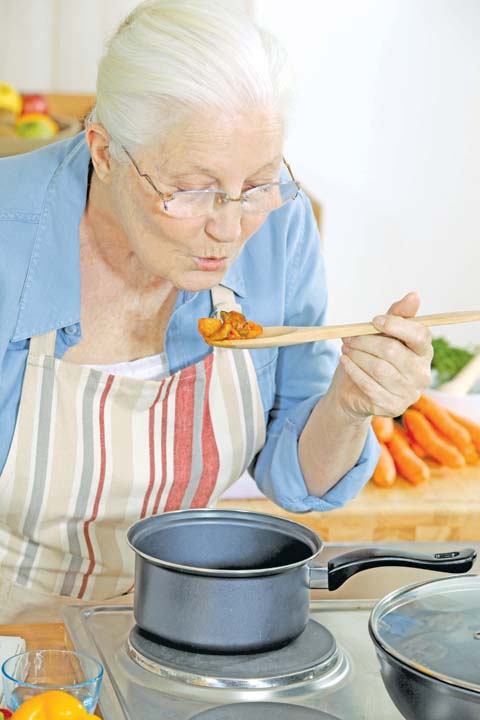 FLAVOR AND AROMA
It is common to just add more sugar and salt to enhance the flavor of food. However, this practice may wreak havoc with one’s blood sugar level and blood pressure.
Intensify flavor and aroma by using herbs, spices, lemon or lime, flavor extracts, strong flavored ingredients like onion, garlic, ginger, chili, pepper, sharp and flavored low fat cheeses, flavored vinegar, and oils. While oils like olive oil, sesame oil and nut butters add flavor, remember to use sparingly because these are after all, fats. Use two to three times the amount of herbs and spices. These do not contain calories, sodium and sugar so they are safe to add to dishes.
Condiments like soy sauce, fish sauce, bagoong (shrimp paste), monosodium glutamate (vetsin), ketchup, and powdered mixes contain sodium. Too much sodium intake could affect blood pressure.
Avoid the strong bitter taste of caffeinated beverages like coffee which could temporarily diminish taste sensitivity.
TEXTURE
The texture of food adds to the mouthfeel and overall eating experience which makes up for the loss of taste or smell.
Mature adults can have a variety of texture on their food—soft, smooth, chunky, chewy, crunchy, or a combination of all these. For example, crushed crackers can be added on smooth soups. Top salads, oatmeal, yogurt, low fat ice cream, and pudding with chopped nuts and sliced fruits. Add crunchy vegetables to rice. The trick is to combine and make sure that ingredients can be easily chewed, swallowed and not cause choking.
If chewing or tooth loss is a problem, visit a dentist be given proper dental care.
TEMPERATURE
Serve hot food to enhance flavor followed by something cold to refresh the taste buds. Be cautious about serving food with extreme temperatures because it will decrease the flavor or worse cause burning sensation and damage to the lining of the mouth and tongue. Extremely cold foods can also cause numbness or painful sensations in the mouth.
COLOR
Serve colorful meals by adding garnishes, fruits, and vegetables. Variety is the key! A simple yet attractive plating would make meals more appealing. Add fresh tomatoes, parsley, basil, or other fresh herbs. This will surely brighten up a boring meal.
[email protected]/www.cheshireque.com/IG:cheshirequerdn/Twitter:CheshireQue

Leave a Reply