Since time immemorial, society has placed a premium on beauty especially among women. It could be seen as a blessing and be used to one’s advantage but could also bring about misery and self-destruction. To quote a dear friend, “Beauty has become a part of a woman’s daily necessity. To be beautiful inside and out requires meticulous touch.” But just how much is too much? When does the pursuit of beauty become detrimental to one’s health?
Whether in denial or deliberately choosing to conceal the truth, we can’t discount the fact that our society is full of people obsessed with being beautiful and suffering from a condition known as disordered eating. While disordered eating is a serious health threat, it is not considered a disease although it could lead to life-threatening medical conditions, which fall under one category: Eating Disorders.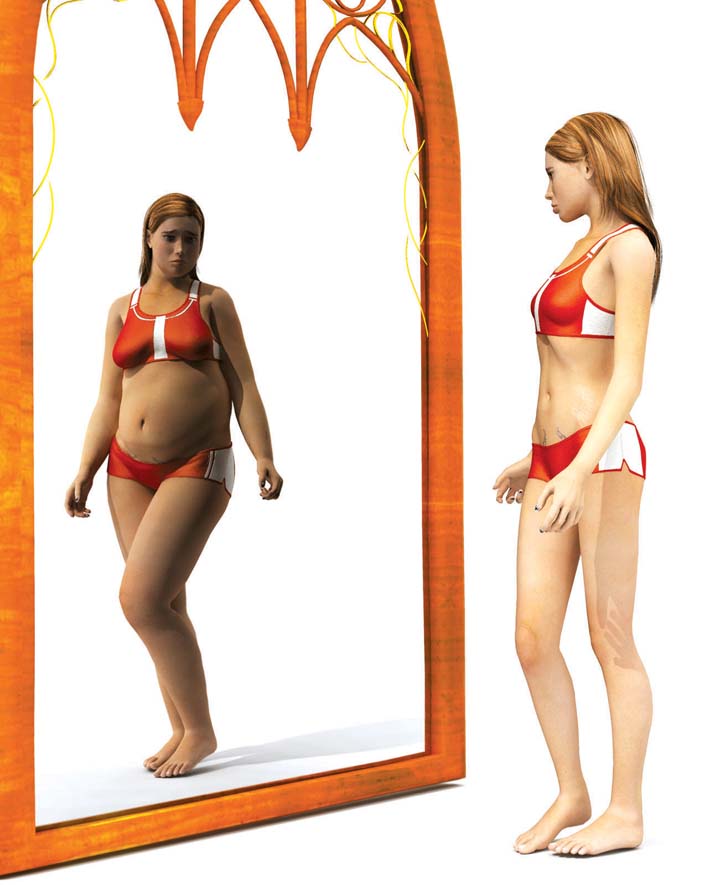
THREE TYPES OF EATING DISORDERS
Anorexia Nervosa is characterized by extreme obsession with being thin and food restriction. People with this condition are in denial of hunger to the point of starvation. They may engage in excessive exercise, withdraw from society, and manifest intense fear of gaining weight and eating in public. They may have trouble sleeping and show lack of emotion or, at times, become irritable. This may also lead to loss of menstruation or amenorrhea among women. Being a perfectionist is a common trait.
Famous singer Karen Carpenter died of heart failure brought about by Anorexia Nervosa. Just like her, people with this illness look frail thin. Some develop soft downy hair on the body called lanugo. They could look at themselves in the mirror and still think they are overweight, thus causing a negative perception of one’s self or distorted body image.
Bulimia Nervosa is evident among people who eat large amounts of food in a short time (bingeing) and getting rid of the food or calories by self-induced vomiting (purging), use of laxative, or excessive exercise. These people are usually within a normal weight range or may be a little bit overweight.
A person with Bulimia Nervosa eats high fat and sugary foods and doesn’t stop until s/he feels pain or discomfort. Damaged teeth and gums and callused hands from purging are warning signs to look watch for.
Guilt is the enemy. After bingeing and purging, guilt sets in which the person feels compelled to give in to his/her emotions and the cycle goes on and on.
Eating Disorders Not Otherwise Specified (EDNOS) is the third type of eating disorder. This includes binge-eating disorder and nocturnal (night) eating syndrome.
Binge-eating disorder is characterized by consumption of large amounts of food within two hours accompanied by a sense of losing control. One may feel discomfort and disgust after eating rapidly, eating along, and eating when not hungry. This is different from overeating, which is usually done in parties and social functions. Rather, binge-eating is done in secret coupled with negative emotions.
Nocturnal (night) eating syndrome consists of morning anorexia, extreme hunger in the evening, and insomnia. This condition may be exacerbated by stress.
These psychological illnesses need to be properly diagnosed and treated by a team of health professionals that can competently address the medical, emotional, and nutritional needs of the individual.
Now, you may not have an eating disorder but you could still be at risk of having disordered eating symptoms which could affect you mentally and physically. Ask yourself these questions:
1. Do you engage in yo-yo dieting?
2. Does your weight fluctuate frequently?
3. Do you follow an extremely restrictive and unhealthy diet plan?
4. Do you follow an extremely rigid exercise program?
5. Do you feel guilt and shame when you’re unable to maintain a “healthy” diet and “good” exercise habits?
6. Are you preoccupied with food, body image, and exercise thus causing you distress and negativity?
7. Are you an emotional eater?
8. Do you use exercise, food restriction, fasting, purging, diet pills, or laxatives to compensate for “excessive” eating?
If you answered yes to any of these questions, I suggest you seek professional help. Consult with a Registered Nutritionist Dietitian for counseling and proper nutrition intervention.
[email protected], www.cheshireque.com

Leave a Reply