The word “organic” has been gaining popularity in the recent years. People buy organic foods mainly for health, food safety, and environmental reasons. Others just want to follow the trend without understanding the real meaning, advantages, and disadvantages. I visited the Bautista Organic Farm in Nasugbu, Batangas to have a firsthand experience in organic farming. It is therefore my goal to answer common questions I get about organic foods based on what I have learned.
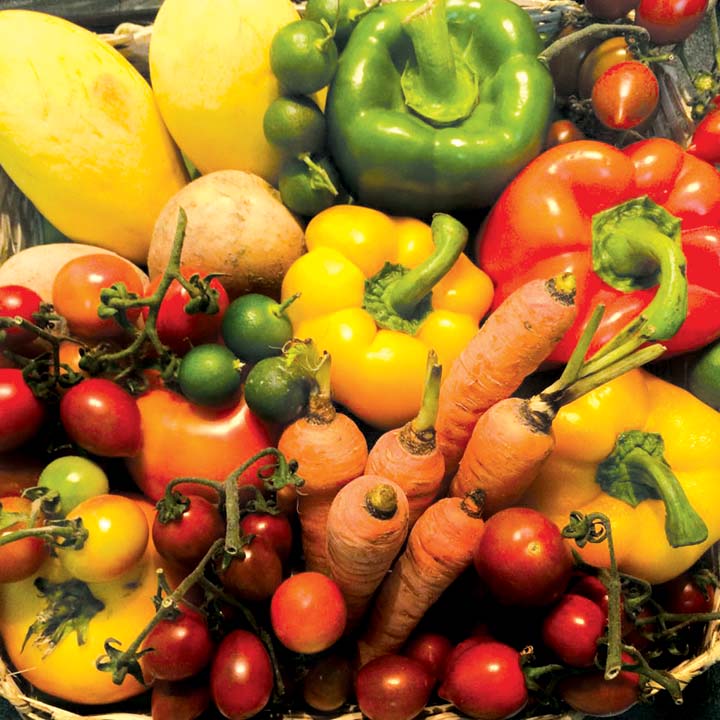
Fresh picks Organic produce from Bautista Organic Farms in Nasugbu, Batangas.
What does the term “organic” mean?
“Organic” pertains to the process of how farmers grow and raise fruits, vegetables, grains, meat, and dairy products. Instead of using chemical fertilizers to promote plant growth, organic farming uses natural fertili-zers made from manure and compost to supply nutrients to the plants. Plants are like people, they need nourishment to grow!
A farmer’s dreaded enemy are the pests and diseases that kill their crops. In organic farming, natural pesticides, beneficial insects and birds, as well as traps are used to reduce pests contrary to the use of synthetic insecticides in conventional farming.
Undesirable weeds grow rampantly and are managed by using synthetic herbicides. In organic farming, weeds are controlled by tilling or plowing the land, manually weeding, putting mulch made from decaying leaves, bark or compost, rotating crops, and using plant-killing compounds that are environmentally generated.
Livestock are given organic feeds, allowed to access the outdoors, given a balanced diet and kept in clean housing to help minimize the development of diseases which is contrary to the use of antibiotics, growth hormones, and medications in conventional farming.
In short, organic farming is labor intensive and does not use any chemicals or synthetic substances.
Are organic foods more nutritious?
According to the Academy of Nutrition and Dietetics and the Mayo Clinic, organically and conventionally produced plants and animals are comparable in their nutrient content. Research is ongoing to determine whether or not organic foods have higher nutrient content.
Are organic foods safer?
Non-organic foods are generally safe to eat as long as proper food handling and preparation are observed. Organic foods, on the other hand, limits one’s exposure to pesticides, which residues are often left on non-organic foods. Pesticides are associated with birth defects, negative effects on the reproductive system of women, and infertility among males.
Organic foods do not contain food additives like preservatives, artificial sweeteners, colorings, flavorings, and monosodium glutamate. These substances are safe for human consumption but some people develop sensitivities.

Marriott’s executive chef Meik Brammer (standing) and the husband and wife team of Craig and Corazon Bautista (seated).
Why go organic?
Whenever available, I incorporate organic foods into my diet because of taste and flavor. After all, eating should be pleasurable. Taste is subjective and some people claim that organic foods taste the same as non-organic. I totally disagree. Organic foods are tastier and more flavorful especially if prepared and cooked the right way to bring out the natural flavors.
Marriott Manila executive chef Meik Brammer is an advocate of using ingredients that are fresh from the farm. He ensures that diners will always enjoy fresh, local, seasonal, and sustainable produce—the way good and real food should be. Chef Meik likes to use small organic carrots because they are tastier.
Organic produce is not widely avai-lable. Our choices are often limited when we go to the market or grocery stores. This May, Marriott’s premiere steakhouse Cru will highlight a “Farm to Table” menu that will give diners a chance to sample and enjoy dishes that are made from certified organic products.
Another reason for going organic is to protect our environment. Accor-ding to Craig and Corazon Bautista of Bautista Organic Farms, “We are not landowners. We are stewards of lands. Our goal is to heal the land from all the chemicals and pesticides used for a very long time.” Organic farming reduces pollution, conserves water, and preserves soil quality.
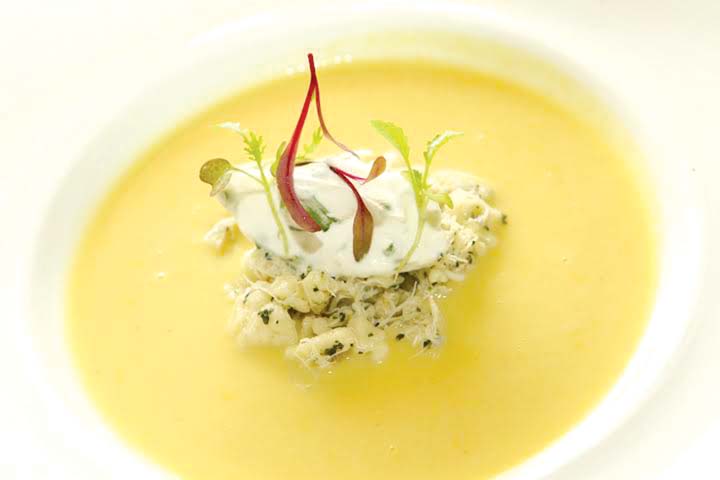
Organic Sweet Corn Veloute (crab spaetzles, chive Chantilly cream).

Citrus Cured Norwegian Salmon (cherry tomatoes, pickled onions, baby arugula, and smoked goat cheese).
What are the disadvantages of organic foods?
A smart buyer should know that organic foods easily spoil or have a short shelf-life. Some are smaller in size and do not look perfect. They may come in odd shapes and colors, too. The cost of organic foods are currently also higher compared to non-organic products.

Mango Confit, Peanut Sponge (smoked raisins, tamarind ice cream, graham cracker crumble)
For comments email [email protected] or visit www.cheshireque.com. You may also follow her on Twitter @CheshireQue.
For your convenience, here is a list of organic food farmers and suppliers:
EMPORIUM ANTIPOLO
For South and North buyers,
pick up point in Makati and EDSA. Buyers may also pick up
at the homestore. For details,
call 0920-9287270 or (02) 6973857.
GREENEARTH HERITAGE FOUNDATION
Sierra Madre Mountains of San Miguel, Bulacan. Open 9 a.m.
to 5 p.m., Monday to Friday,
except public holidays.
Log on to www.greenearthheritage.org/ph.
HOLY CARABAO HOLISTIC FARMS
Located at Sta. Rosa, Laguna.
To order veggies or schedule a farm visit, call 0918-9422611.
GOOD FOOD CO.
The company delivers to 10 pick-up points around Metro Manila.
For details, call 0906-4332324
HERBANA FARMS.
Available at Salcedo Weekend Market and Mercato Centrale.
For details, please call 0929-2698602.

Leave a Reply